
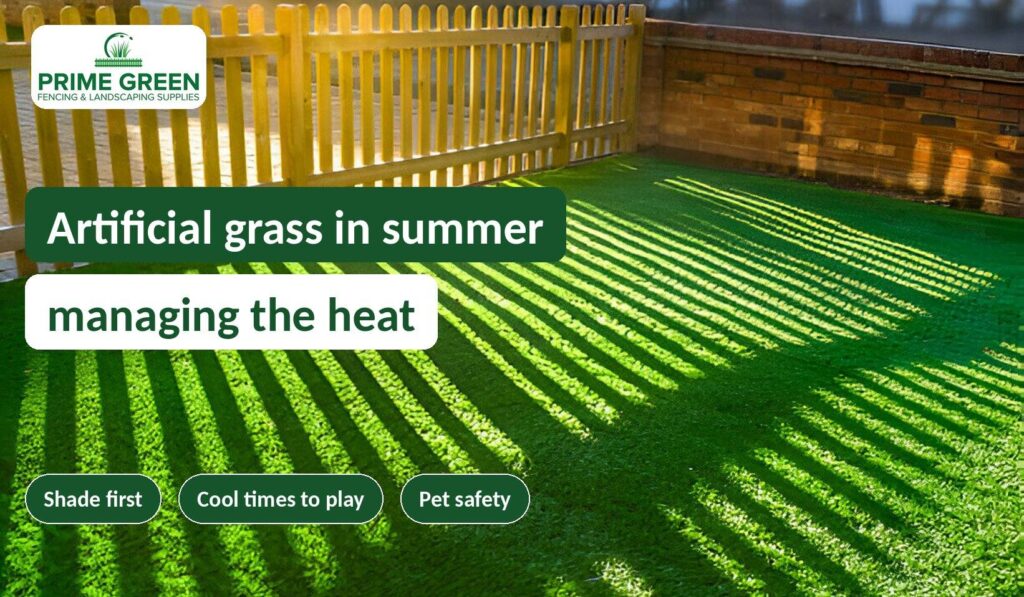
Artificial grass has become a common sight across Melbourne’s western suburbs, especially in new estates where small backyards, busy weekends and water restrictions make a natural lawn harder to keep. It stays green through winter mud and summer dry spells alike. But as the warmer months arrive, many owners notice something they did not expect: on a hot, still afternoon the surface can feel surprisingly warm underfoot.
That does not mean synthetic turf is the wrong choice. It simply means summer heat is worth planning for, whether you already have artificial grass or you are thinking about laying it before Christmas.
Why artificial grass gets warm in the sun
A natural lawn cools itself. Living grass draws moisture from the soil and releases it through its leaves, which takes heat away from the surface. Synthetic fibres cannot do this. They absorb sunlight and hold the warmth, and the backing and infill beneath them can store heat too.
This is not just anecdotal. A 2022 independent review of synthetic turf by the NSW Chief Scientist and Engineer noted that synthetic surfaces lack the cooling of natural turf and that high surface temperatures have been recorded on unshaded synthetic turf. The key word there is unshaded. How hot your lawn gets depends a great deal on where it sits and what is around it.
What affects how hot your lawn feels
Sun exposure and orientation
A north or west facing backyard with no trees will catch the strongest afternoon sun. Areas that get morning sun and afternoon shade usually stay far more comfortable.
Reflected heat from nearby surfaces
Light coloured walls, windows and metal surfaces can bounce extra heat onto the turf. In tightly packed estates, a lawn hemmed in by a rendered wall and a glass sliding door may sit noticeably warmer than one with open space around it.
Pile height, colour and infill
Products differ in fibre shape, density and colour, and the infill used beneath the fibres also varies. Some ranges are marketed as cooler or heat reducing, so it is worth comparing options and asking what the claims are based on before you buy.
Practical ways to keep it comfortable
You do not need to rip up your lawn to enjoy it through summer. A few practical steps can make a real difference.
- Add shade. A shade sail, pergola or a couple of well placed trees is the most effective change you can make. Shade also protects the fibres from long hours of direct sun.
- Use it at the right time of day. Plan play and entertaining for the morning or evening on hot days, when the surface has had a chance to cool.
- Give it a rinse. Many owners hose the turf down before using it on a warm day. It can take the edge off for a while, although the effect fades as the surface dries.
- Keep pets in mind. Dogs feel surface heat through their paws, so make sure they have a shaded spot and fresh water rather than lying on turf in full sun.
- Mix in other surfaces. Garden beds, mulch and plants around the edges break up large areas of synthetic surface and help the whole yard feel cooler.
Planning a new install before summer
If you have not laid your lawn yet, you have the chance to design for heat from the start. Look at how the sun moves across the yard on a clear afternoon and note where shade falls. Consider keeping a section of natural planting in the hottest corner, and think about where a shade structure or tree could go later.
Good preparation matters too. A properly compacted, free draining base helps the turf sit flat and drain after summer storms. Our artificial grass supplies come in a range of styles, and we can talk you through pile heights, colours and what suits a sunny backyard.
If you are planning a wider backyard makeover at the same time, our landscaping supplies include the materials for garden beds and borders that soften the heat around synthetic areas.
Looking after turf through the warmer months
Summer is also when synthetic lawns tend to collect leaves, pollen and dust. Regular brushing keeps the fibres upright, and a rinse clears away grime. For a season by season routine, our guide to maintaining artificial grass in Australian weather covers brushing, cleaning and dealing with pet areas.
Keep heat sources away from the surface as well. Barbecues, fire pits, outdoor heaters and even reflected light from some windows can damage synthetic fibres. Set the barbecue on pavers or a deck rather than directly on the turf.
Many of our customers across the west, from Point Cook to landscaping supplies in Tarneit, combine artificial grass with shade trees and garden beds to get a low maintenance yard that is still pleasant to use on a warm day.
Frequently asked questions
Is artificial grass too hot for children to play on in summer?
It can become uncomfortably warm in full afternoon sun. Check the surface with your hand first, add shade where possible and plan play for cooler parts of the day.
Does lighter coloured artificial grass stay cooler?
Colour, fibre shape and density can all influence how warm turf feels. Ask to see different products side by side and check what any cooling claims are based on.
Can a barbecue sit on artificial grass?
It is best not to. Heat and hot fat can melt or mark the fibres. Place the barbecue on pavers, concrete or decking instead.
Will summer sun fade my synthetic lawn?
Long exposure to strong sunlight gradually affects all outdoor materials. Choosing a quality product and adding shade where you can will help the lawn keep its colour for longer.
Is it worth adding shade over an existing synthetic lawn?
Yes, for most sunny yards. Shade reduces how much direct sun reaches the turf, makes the space more comfortable and helps protect the fibres.
Plan a cooler backyard with Prime Green Fencing
Want a backyard that stays green and still feels good to use when the weather heats up? Drop into our yard at 26 Apex Dr, Truganina VIC 3029, or call 0452 113 113, and our team will help you compare artificial grass options and plan the materials for a cooler, more comfortable outdoor space this summer.