
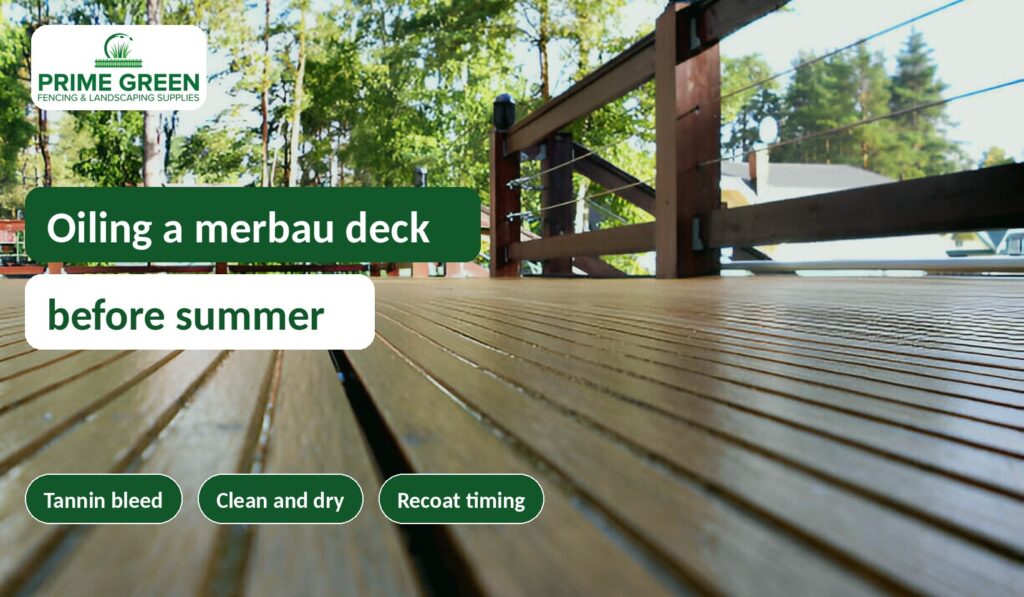
Spring is when most Melbourne households start thinking about the deck again. The barbecue comes out, the outdoor setting gets moved back into place and the boards that looked rich and red last year now look dull, grey or patchy. For a merbau deck, a good clean and a fresh coat of oil before the hot weather arrives can make a big difference to how it looks and how it copes through summer.
This guide covers what merbau needs, how to deal with the tannin it releases, and how to get a good result without rushing the job.
Why merbau needs regular attention
Merbau is a dense hardwood and a popular choice across our decking range because of its deep colour and solid feel underfoot. But timber left out in the sun and rain keeps changing. Ultraviolet light fades the surface colour, moisture moves in and out of the boards, and foot traffic slowly wears the coating away.
Oil does not stop any of this completely, but it slows the weathering and keeps the colour looking richer. Our merbau decking page explains more about the timber itself. A deck that gets a little care each year tends to be far easier to look after than one left for several summers.
Understanding tannin bleed
Merbau contains natural tannins, and they are one of the first things new deck owners notice. When uncoated boards get wet, these tannins can wash out as a reddish brown run-off. That run-off can mark paving, concrete, render and other porous surfaces close by.
On a new deck, regular hosing in the early days helps to flush away excess tannin. Protect any nearby paving or concrete by covering it or wetting it down first, and rinse splashes away quickly. If your deck drains onto a light coloured path or driveway, deal with this before you do anything else, because stains are much easier to prevent than to remove.
When to oil a new deck
Advice differs on how long to wait before coating new boards. Some oil suppliers suggest leaving a deck to weather for a few weeks, while others recommend preparing it with a timber cleaner and coating sooner. Pre-oiled boards may have their own timing for a top coat, so read the information supplied with the timber. Your best guide is the label on the product you plan to use, as the manufacturer’s directions take priority.
A simple way to oil an existing deck
A good finish depends more on preparation than on the oil itself. Pick a stretch of mild, dry weather, then work through these steps:
- Clear and sweep. Move everything off the deck and clear leaves and grit from the gaps between the boards.
- Clean the timber. Scrub with a deck or timber cleaner to lift dirt, grease and tannin marks, following the label, then rinse well.
- Let it dry. Give the boards time to dry out properly. Coating damp timber is a common cause of a poor finish.
- Test the surface. Sprinkle on some water. If it beads, old coating may still be sitting on the boards. If it soaks in, the timber is more likely ready to take oil.
- Apply thin, even coats. Work along the length of a few boards at a time and avoid heavy pooling. Most finishes call for two coats, with drying time set out on the label.
Avoid oiling in strong, direct sun if you can, as the boards can get hot enough to make the oil dry too quickly and leave lap marks. Early morning or a mild, overcast day usually works better.
A quick safety note
Rags soaked in some oil-based finishes can heat up as they dry and may ignite. Check the product label for disposal advice, and do not leave oily rags in a pile, especially during the warmer months.
How often should you recoat?
There is no fixed answer, as sun, rain, foot traffic and the product you use all make a difference. Rather than following the calendar, watch the deck. When the timber starts to look dry or faded, or water no longer beads on the surface, it is time for another coat. North and west facing decks in Melbourne’s western suburbs tend to get more sun and often need attention sooner than shaded ones. If you are building in an exposed spot, our guide to the best decking material for Melbourne’s weather is worth reading before you commit.
Planning a new deck or repairs
If some boards have split or lifted, replace them before you oil, and allow for the new boards to look different at first. Colour tends to even out over time as the timber weathers. If you are in the Rockbank area, our Rockbank fencing and landscaping supplies page shows what we commonly supply nearby. Measure the area you need and bring a photo of the existing deck, as it helps when matching board sizes.
Frequently asked questions
Why has my merbau deck turned grey?
Sunlight and weather gradually break down the surface colour of uncoated or worn timber. A thorough clean followed by fresh oil will usually bring back much of the warmth, though the result depends on the condition of the boards.
Can I oil a deck straight after washing it?
No. Wait until the boards have dried properly, as moisture in the timber can stop the oil from soaking in evenly. The drying time depends on the weather and how much sun the deck gets.
How do I remove tannin stains from concrete or paving?
Rinse fresh marks promptly with water. For older marks, a suitable cleaner may help, but test it on a small area first. Porous surfaces can hold stains, so prevention is always easier.
Do I need to oil the underside of the boards?
Sealing all sides is often suggested when boards are first installed, as it helps limit moisture movement. It is not practical once a deck is built, so check the coating maker’s guidance before you start.
Is oil or a decking stain better for merbau?
It depends on the look you want and how much upkeep you are happy to do. Oils soak in and tend to refresh easily, while some film finishes can peel when they wear. Read the product details and pick a finish suited to hardwood decks.
Talk to Prime Green Fencing about your deck
Thinking about refreshing your outdoor area or replacing tired boards before summer? Visit our Truganina yard at 26 Apex Dr, Truganina VIC 3029, or call 0452 113 113, and tell us what you are working on. We will help you find the right merbau decking and a sensible plan for your space.