
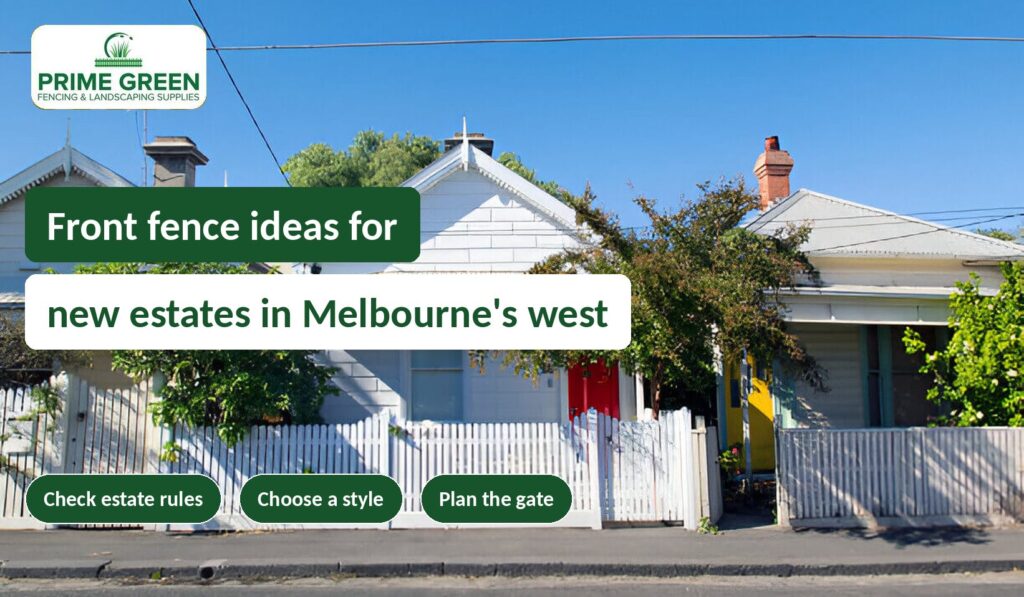
Moving into a brand new home in Melbourne’s west is exciting, but the front yard often arrives as a blank strip of soil with a letterbox and not much else. A front fence is one of the first jobs many owners want to tackle, both for privacy and to give the home a finished look from the street. Before you pick a style, though, it pays to understand that front fences on new estate blocks usually come with a few more rules than a back fence does.
This guide walks through practical front fence ideas for new estates, the checks to make before you order materials, and how to choose a design that suits both your home and the streetscape your estate is trying to create.
Why front fences on new estates need extra planning
Most new land releases across Fraser Rise, Tarneit, Truganina, Rockbank and the surrounding growth suburbs are sold with design guidelines attached to the contract of sale. These guidelines are written by the developer to keep the estate looking consistent, and front fences are one of the items they most often control. Some estates prefer open front yards with no fence at all, while others allow a low fence or a fence that sits back from the boundary.
On top of any estate rules, front fence height is also regulated in Victoria. Part 5 of the Building Regulations 2018 sets maximum heights for any fence within 3 metres of the street alignment, and a taller fence may need consent or a building permit. Our earlier article on fence permits in Rockbank covers the permit side in more detail.
Find your design guidelines first
Look through your land contract or the developer’s website for a document called design guidelines, building envelope or memorandum of common provisions. Check what it says about front fence height, materials, colours and setbacks. Some estates also require approval from a design review panel before any front landscaping or fencing goes in, so allow time for that step.
Talk to your council if anything is unclear
If the guidelines have expired or do not mention fencing, your local council or a registered building surveyor can confirm what applies to your lot. Corner blocks deserve particular care because a fence near an intersection can affect sight lines for drivers and pedestrians.
Front fence ideas that suit new estate homes
Once you know the limits, you can focus on style. These ideas work well with the modern facades common across Melbourne’s western suburbs.
Horizontal timber slats
Horizontal slats remain one of the most requested looks for contemporary homes. Small gaps between boards let light and air through while still softening the view into your front windows. Quality timber fencing materials can be stained to complement render, brick or cladding, and the gaps can be adjusted to suit how much privacy you want.
Low picket or open style fences
Where estate guidelines ask for an open streetscape, a low picket or open style fence defines the boundary without blocking the view of the house. This is a popular choice for families with young children or pets who need a gentle barrier at the front of the property.
Rendered piers with infill panels
Masonry or rendered piers with timber or metal infill panels give a more formal look. Many builders offer this style as an upgrade, and it can be matched to the colour of your facade. If you choose this option, plan the post footings carefully, as many western suburbs blocks sit on reactive clay that moves with the seasons.
Landscaping instead of fencing
If your estate does not allow a front fence, a combination of garden beds, edging and low hedging can still separate your yard from the footpath. Raised beds made from sleepers, decorative pebbles and hardy native plants give a tidy finish without breaking any rules.
Gates, letterboxes and the details that matter
A front fence usually needs at least one pedestrian gate, and sometimes a driveway gate as well. Think about which way the gate will swing, whether it needs to self close, and how it will latch. Our guide to gate hinges, latches and drop bolts explains the hardware options in plain language.
Plan where the letterbox, meter box and house number will go before the fence is built. Estate guidelines sometimes specify letterbox placement, and service authorities need clear access to meters, so leave room for both.
Choosing materials that last in western Melbourne
Front fences face the street, so they need to look good for years with minimal upkeep. Consider how each material handles sun, wind and the occasional knock from a bin or bike.
- Treated pine is affordable and easy to stain, but needs a good coating to hold its colour.
- Hardwood offers strength and natural beauty, and weathers to a silver grey if left untreated.
- Steel posts set in concrete give a stable base for timber infill on reactive soils.
- Exterior grade stains and oils protect timber and help it match your home’s palette.
If you live in one of the newer estates near Fraser Rise, our team supplying fencing and landscaping supplies in Fraser Rise can help you match materials to your estate’s colour palette.
A simple front fence checklist
- Read your estate design guidelines and note any limits on height, materials and setbacks.
- Check whether a design review panel needs to approve your plans.
- Confirm height rules and permit needs with your council or a building surveyor.
- Locate underground services before digging post holes.
- Plan gates, letterbox and meter access.
- Choose materials and finishes that match your facade.
Frequently asked questions
Can my estate stop me from building a front fence?
Many estates use design guidelines that limit or prohibit front fences for a set period. These rules form part of your contract of sale, so check the document and ask the developer if you are unsure.
How long do estate design guidelines usually apply?
It varies between developers. Some guidelines apply for a set number of years, while others remain in place through a restrictive covenant on the title. Your conveyancer can confirm what applies to your lot.
Does a front fence on a corner block have different rules?
Corner blocks often have extra requirements because fences close to an intersection can block visibility. Check your estate guidelines and confirm with your council before building.
Can I build my front fence before my landscaping is finished?
Yes, and many owners do. Building the fence first can make it easier to plan garden beds and paths, as long as the design has any approvals it needs.
What is the best timber for a stained front fence?
Both treated pine and hardwood take stain well. Pine is lighter and more budget friendly, while hardwood is denser and naturally more durable. Our team can show you samples so you can compare colour and grain.
Plan a street ready front fence with Prime Green Fencing
Ready to give your new home the finished look it deserves? Visit our yard at 26 Apex Dr, Truganina VIC 3029 or call 0452 113 113. Bring your estate guidelines along and our team will help you choose fencing, gate hardware and landscaping supplies that suit your block and your street.